“Truly the best customer service I’ve experienced in a long time!” - Penny W.
Remembrance Day: Following in His Footsteps
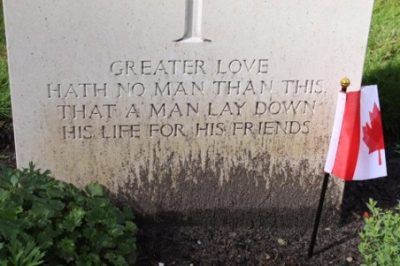
Every November 11th, we are reminded to pause.
To remember the people who served.
To remember the sacrifices they made.
And to remember the lives that were changed forever by war.
For me, Remembrance Day has always had a very personal meaning.
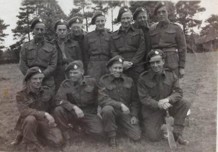
My grandfather served with The Lincoln and Welland Regiment during the Second World War. He went overseas and spent the final years of the war fighting his way through Europe. He was wounded twice.
And yet, he didn’t talk much about it.
Like many veterans of his generation, he wasn’t one to tell stories about the war. There were no long accounts of battles around the dinner table or detailed descriptions of what he had seen.
For the most part, the war remained something he carried quietly with him.
Trying to Understand
When someone doesn’t talk about their experiences, it can leave you with more questions than answers.
What did he see?
What did he feel?
What was it like to be so far from home?
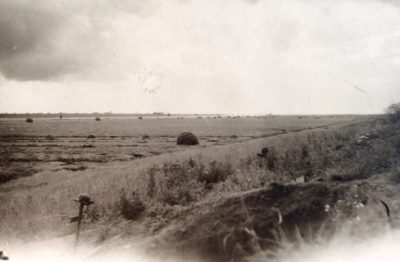
What did those places look like?
And perhaps most importantly—what did he experience that made him choose not to talk about it?
I will never have all of those answers.
But years later, I found another way to get a little closer to his story.
I retraced the rough route that his regiment took through Europe.
I travelled through parts of France, Belgium, the Netherlands and Germany, following the path that Canadian soldiers had taken so many decades earlier.
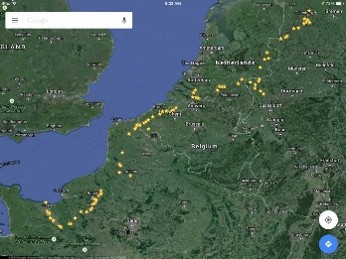
Suddenly, places that had only existed as names in family stories and history books became real.
There were roads they had travelled.
Towns they had passed through.
Rivers, canals and countryside that had once been part of their journey.
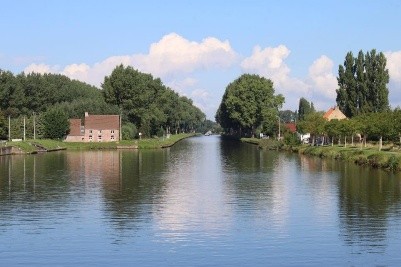
The Lincoln and Welland Regiment
The Lincoln and Welland Regiment had a long history of service, with roots dating back to the 19th century. During the Second World War, the regiment’s 1st Battalion sailed for Britain in 1943 before landing in France on July 25, 1944. From there, they fought their way across Northwest Europe until the end of the war.
Their battle honours tell a story of the journey: Falaise, the Seine, the Scheldt, the Breskens Pocket, the Lower Maas, Kapelsche Veer, the Rhineland and more.
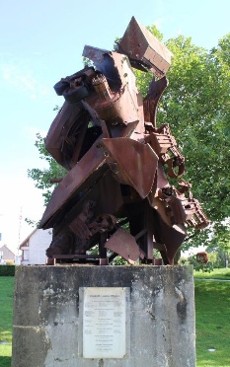
Those names can sound like distant pieces of military history.
But for families like mine, they represent something much more personal.
They represent someone’s grandfather.
Someone’s father.
Someone’s son.
Someone who left home and didn’t know exactly what lay ahead.
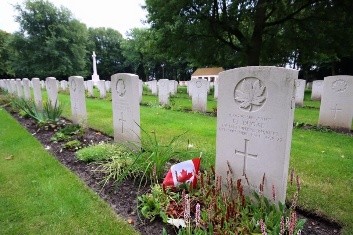
The Things We Don’t Know
I sometimes wish my grandfather had told me more.
I wish I knew exactly where he was when he was wounded.
I wish I knew what he remembered most about Europe.
I wish I knew which places stayed with him long after the war was over.
But perhaps there is something important in the fact that he didn’t talk about it.
Maybe some experiences are simply too difficult to put into words.
So instead of having his stories, I have the places.
I have the route.
I have the history.
And I have the knowledge that somewhere along those roads, through those towns and across that countryside, my grandfather was there.
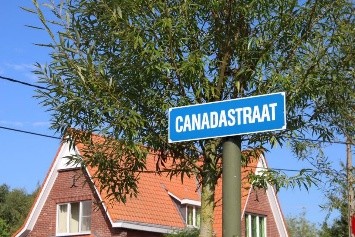
Remembering
Remembrance Day isn’t only about remembering the battles.
It is about remembering the people who lived through them.
It is about recognizing that behind every name on a memorial was a real person with a family, a home, hopes for the future and people waiting for them to come back.
My grandfather came home.
He was wounded twice, but he survived the war and eventually returned to his family and his life in Canada.
He didn’t tell me much about what happened overseas.
So, in a small way, I went looking for him.
I followed the road he had travelled.
And while I can never know exactly what he experienced, I can stand in those places and remember that he was there.
And perhaps that is what remembrance is really about—connecting the sacrifices of the past with the life we are fortunate enough to live today.
Because the freedom they fought for isn’t something that exists only in history books. It is here, all around us, every day.
It is in the freedom to raise our families, build our businesses, work hard, gather with friends, support our neighbours and enjoy the simple things that make a community feel like home.
It is in being able to walk down our streets, shop at our local stores, enjoy our beautiful community and live our lives in Canada—a country we are incredibly fortunate to call home.
My grandfather and so many others fought for a future they could only imagine.
We are living in that future.
And for that, we remember.
Lest we forget.